Libya has long been one of the sharpest points of division in Turkish foreign policy. For years, Ankara stood firmly behind the UN-recognized Government of National Accord (GNA) in Tripoli, clashing directly with the forces of General Khalifa Haftar’s Libyan National Army (LNA). Turkish military intervention in early 2020 tipped the balance on the battlefield: with Turkish advisers, equipment, and drone support, Tripoli repelled Haftar’s advance and recaptured key locations, including the al-Watiya airbase.
That history makes the developments of 2025 all the more remarkable.
On 4 April 2025, the anniversary of the outbreak of Libya’s second civil war, Major General Saddam Haftar, Commander of the LNA Ground Forces, visited Ankara at the invitation of General Selçuk Bayraktaroğlu, Commander of the Turkish Land Forces. The visit included talks with Defence Minister Yaşar Güler, marking the first time that the son of General Haftar engaged in such high-level official meetings in Türkiye.
The Turkish Ministry of Defence characterized the meeting as part of a broader effort to promote a “United and Single Libya.” Officials stressed that Ankara seeks to move beyond framing Libya in terms of East and West, supporting instead inclusivity and stability across the whole country.
“Türkiye and Libya are two friendly countries with deep historical and cultural ties,” the Ministry stated. “Since day one, our goal has been for the Libyan people to live in unity, togetherness, peace, and stability.”
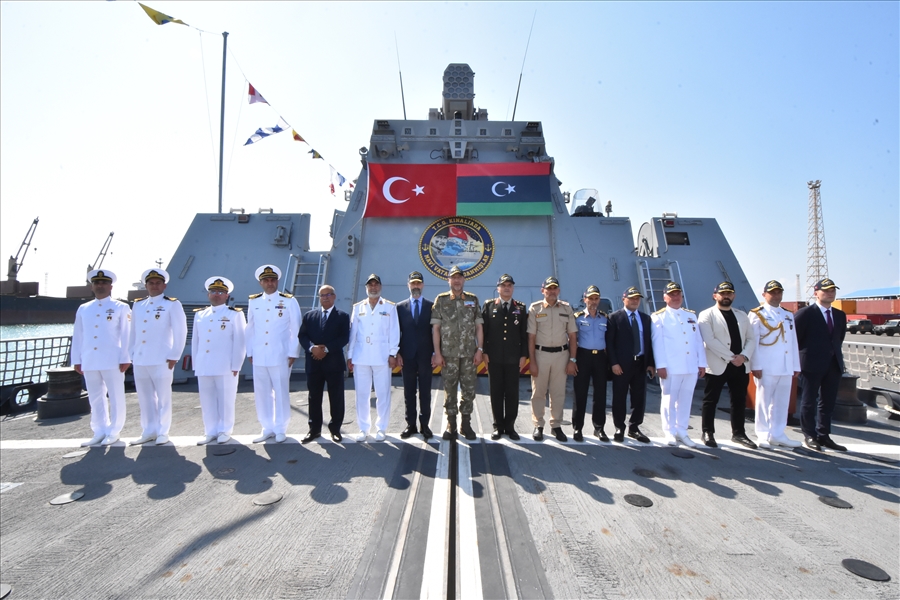
This new political dialogue has been matched by a naval outreach effort. The Turkish Navy’s Ada-class corvette TCG Kınalıada visited Tripoli on 17–18 August 2025, where it hosted high-level Libyan officials, including the Minister of Defence, the Chief of General Staff, the Commander of the Libyan Navy, and the Commander of the Coast Guard. Türkiye’s Ambassador in Tripoli, Güven Begeç, also attended.
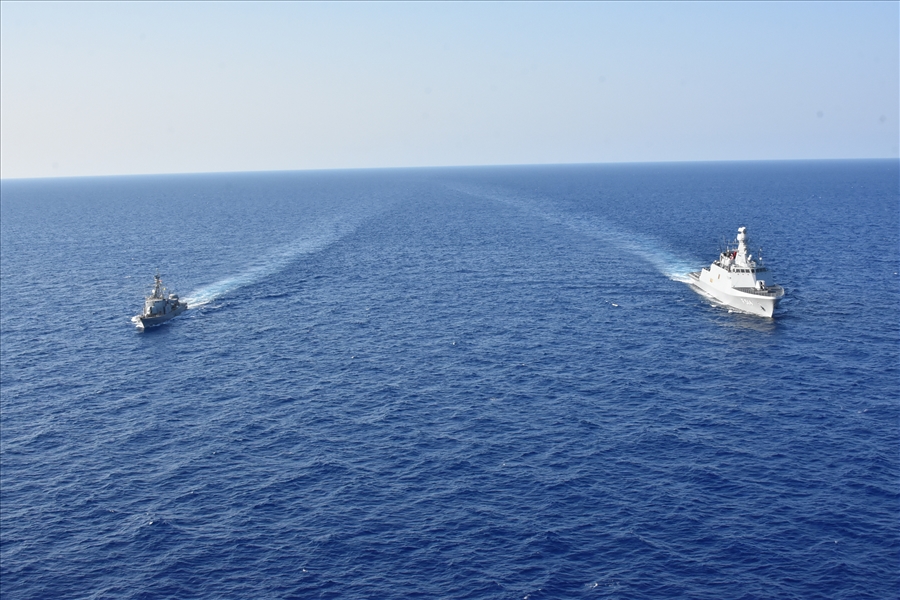
Following the port visit, TCG Kınalıada conducted joint exercises at sea with the Libyan Navy’s fast attack craft Shafak, underlining the operational dimension of this new partnership.
Significantly, the corvette’s itinerary did not end in Tripoli. On 20–21 August 2025, TCG Kınalıada continued eastward for a port visit to Benghazi—Haftar’s stronghold. Military meetings and official receptions were planned as part of the stop, making it the first time a Turkish Navy warship has visited both rival power centers of Libya in a single deployment.
This dual-visit underscores Ankara’s stated policy of “embracing all of Libya” and promoting stability throughout the country, rather than aligning solely with one side as in the past.
The Libya outreach coincides with a broader defense diplomacy push. On the same week that TCG Kınalıada was in Tripoli, Türkiye hosted Lieutenant General Issa Saif Mohammed Al Mazrouei, Chief of Staff of the United Arab Emirates Armed Forces, in Ankara. The visit included an official welcoming ceremony, bilateral meetings at the General Staff Headquarters, and the signing of the High-Level Military Dialogue Meeting report. Defence Minister Güler and General Bayraktaroğlu also received the Emirati delegation, signaling Ankara’s intent to normalize military relations with another former adversary in Libya.
Five years ago, Türkiyey and Haftar’s forces were locked in open conflict. Today, Ankara is hosting Haftar’s son in its capital, while its warships visit both Tripoli and Benghazi. These developments highlight a dramatic recalibration of Turkish policy: from direct confrontation to balanced engagement with all Libyan actors.
Whether this outreach results in a lasting political settlement remains to be seen. But one thing is clear—Türkiye is positioning itself as a central mediator and guarantor of stability in Libya, using both diplomacy and naval presence to bridge old divides.


