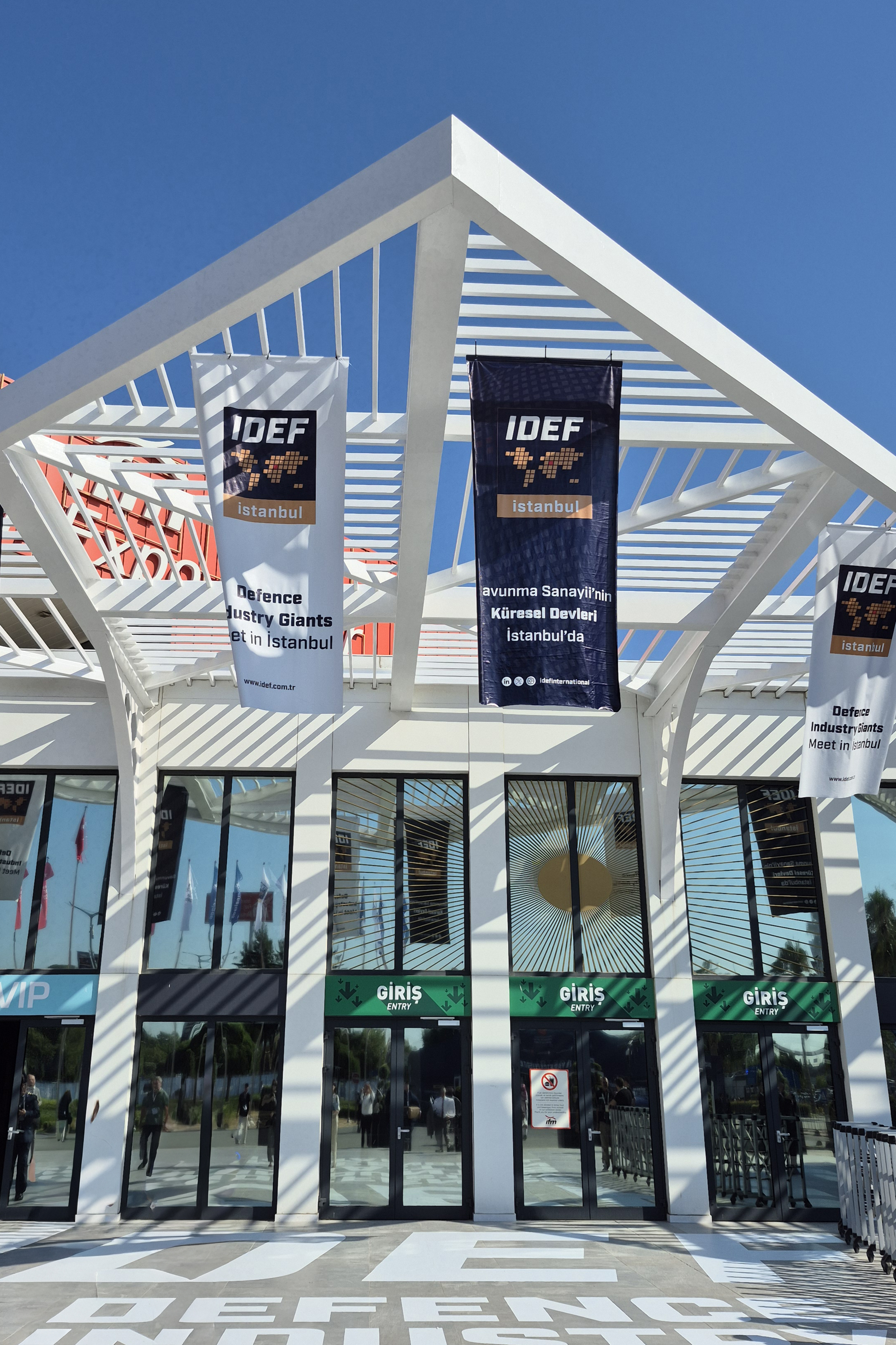
 This is my sixth and final instalment regarding IDEF 2025.
I have been attending these defence exhibitions since 1987, when they were still called IDEA and organised in Etimesgut, Ankara. Much has changed since those days. With the benefit of hindsight, I can say that the Turkish defence industry has now reached a plateau. It is no longer a “developing” industry in the traditional sense. In some areas, it has proven capable of producing world-class weapons systems—systems that can directly shape the outcomes of armed conflicts.
This is an impressive achievement. Yet, precisely because of these gains, now is the time to take a deep breath and think about the road ahead. If the goal is to carry the industry to the next level, this moment is ideal for reflection and recalibration.
I see two important issues to be addressed in a short time if we want to be a world-class player:
The urgent need for a roadmap
The need to put the import substitution policy behind
1. The Urgent Need for a Roadmap
The first thing we urgently need is a comprehensive, transparent, and forward-looking roadmap. In business, there is a well-known dictum: you cannot manage what you cannot measure. Without measurable targets and milestones, we cannot evaluate progress—nor can we identify where we enjoyed a smooth ride or where we encountered serious resistance.
The SSB has indeed published the 2023–2027 Savunma Sanayii Sektörel Strateji Dokümanı, outlining localisation efforts, technological breakthroughs, investment priorities, and industrialisation strategies. This is an important document—essential for the supply side of the industry. Its stated aim is to strengthen domestic companies with design and production capabilities, develop a broad-based local supply chain, and maximise the local content of defence products.
However, what this document lacks is the demand side—the clear articulation of what the Turkish Armed Forces and other security institutions will need in 5, 10, or 20 years’ time.
Many advanced defence nations address this problem by issuing regularly updated defence white papers. These documents—often published every 3–5 years—lay out national security priorities, expected threats, force structure goals, and procurement priorities. They are often unclassified in their general form, ensuring transparency and allowing industry to align long-term investments with clearly stated national defence needs.
For example:
• Australia has used successive white papers to outline its strategic pivot toward the Indo-Pacific, providing industry with certainty about naval shipbuilding, airpower, and cyber investments.
• Japan publishes an annual Defence of Japan report that combines strategic threat assessment with procurement intentions, giving both domestic and international suppliers a clear picture of future needs.
• The UK links its Defence Command Paper to industrial strategy, ensuring British firms know where to invest R&D resources.
Türkiye does not currently publish an equivalent open, comprehensive defence white paper. The last such document was reportedly issued in 2000. The absence of such a plan means that long-term procurement priorities remain opaque to industry—forcing companies to rely on trend-watching rather than structured, demand-driven planning.
Matching Capabilities with Needs
A comprehensive national defence plan should identify which branch of the armed forces needs what capability, and which industry player is best suited to deliver it. Without such a plan, the defence industry struggles to see its future clearly, making long-term production planning and related R&D efforts problematic.
In the absence of coordination, companies sometimes develop similar products. While competition is generally healthy, Türkiye must ensure its limited resources are used efficiently.
The Dangers of Trend-Driven Development
One of the unintended consequences of lacking a transparent, demand-oriented roadmap is that companies chase whatever happens to be fashionable at the moment. For example, since the Russian invasion of Ukraine, unmanned systems have been in vogue. Many Turkish firms are now developing solutions to perceived problems in this domain. While innovation is healthy, the market is filling with multiple projects and prototypes that have similar performance characteristics and overlapping functions.
The critical question is: are these innovations driven by real, clearly stated operational requirements, or by assumptions? Are the armed forces prepared to integrate these systems effectively? Or are the voices of soldiers and field commanders—those engaged in real operations—being lost in the noise?
Without careful coordination between the supply side (industry) and the demand side (armed forces and security institutions), there is a risk of misallocated resources, duplicated efforts, and missed opportunities.
One senior figure in the Turkish defence establishment recently remarked that over 5,000 new products were exhibited during IDEF. But the real measure of success is not how many are displayed—it is how many are actually in the inventory of the Turkish Armed Forces, functioning as intended, and produced at the scale required to meet operational demands on the front lines.
2. Getting Rid of Import Substitution Policy
Today, the main driver of Türkiye’s defence industry is “import substitution”—the strategy of replacing goods previously imported with those produced domestically, aiming to increase self-sufficiency, protect strategic sectors, and reduce vulnerability to foreign supply disruptions. When Türkiye could not get Mk-41 VLS for its shipbuilding projects, it started to develop MİLDAS, a national vertical launcher system suitable for the existing missiles in the inventory and newly locally developed missiles. Similarly, when Türkiye could not get additional RAM air defence missiles, Roketsan developed Levent and Aselsan developed Göksur missile systems to substitute RAM in future projects.
The armed forces demand from the industry weapons similar to those already in service. The services demand weapons they already know, use, and depend on to be made in Türkiye when these weapons can no longer be obtained from abroad.
Import substitution is a solid starting point, and many countries have industrialised based on it. It ensures sovereignty in critical systems, builds local industrial capability, and strengthens the supply chain.
However, here are two pitfalls of this strategy. First, import substitution alone is not a sustainable long-term strategy. Once domestic needs are largely met, and the Turkish defence market is finite, growth requires exports—and a solution designed solely for Türkiye may not suit foreign buyers. If firms rely exclusively on guaranteed local demand, they risk losing competitiveness, falling behind technological frontiers, and duplicating efforts without innovation.
Second, since the armed forces demand weapons they know and use, they are not open to innovation and creative solutions that might serve them better in future conflicts. They are looking for weapons of yesterday or, at best, weapons for today. The problem with the import substitution strategy is that it focuses on solving the problems of domestic markets. However, it is very clear that Türkiye’s defence market is not big enough to support the industrial base present at IDEF 2025.
War is too important to be left to the generals.
Georges Clemenceau famously said, “War is too important to be left to the generals.” I would argue that the Turkish defence industry is too important to be left solely to generals and engineers if we want it to go to the next level, which would be as a global brand.To become a significant player in the global defence market, it is not enough to have quality products and solutions. Equally important is the ability to effectively market these innovations under a strong and trusted brand. “Made in Türkiye” should evolve from a mere label of origin into a mark of technological excellence and reliability recognised worldwide.
Achieving this will require not only investment in research and development but also the professionalisation of marketing, export strategies, and international partnerships. Turkish defence companies must develop a global mindset, understanding diverse customer needs and tailoring their offerings accordingly. This shift will help move the industry beyond domestic substitution and trend-driven development toward sustainable growth and international competitiveness.
By breaking free from the constraints of domestic substitution and trend-following, Türkiye can cultivate a defence industry that is agile, forward-looking, and globally competitive. This will allow it to contribute meaningfully to national security while carving out a respected position on the world stage.
Conclusion
The future of Türkiye’s defence industry depends on a strategic pivot from inward-looking policies to a broader, export-driven vision. Establishing a transparent, long-term roadmap aligned with the real needs of the armed forces is essential to guide investment, innovation, and production efficiently. At the same time, the industry must move beyond import substitution, embracing innovation and international market dynamics to remain competitive globally.
Ultimately, success will be measured not just by the quantity of products displayed at exhibitions but by the impact these systems have in service and their acceptance in international markets. With a unified vision and coordinated effort, Türkiye’s defence industry can realise its full potential as a key contributor to both national security and global defence technology.

 devrimyaylali.com