This is the third and final part of my series examining Türkiye’s emerging ambition to build and operate nuclear-powered submarines. In Part 1, I explored why Türkiye wants this capability. Part 2 analyzed what it would take to achieve it. Now, I look at what it would cost—not just in monetary terms, but also politically and diplomatically.
The desire to construct and operate a nuclear-powered submarine is a long, winding, and uphill road. The cost of such a project is not merely financial—it also carries political, diplomatic, and strategic implications, both within and beyond Türkiye.
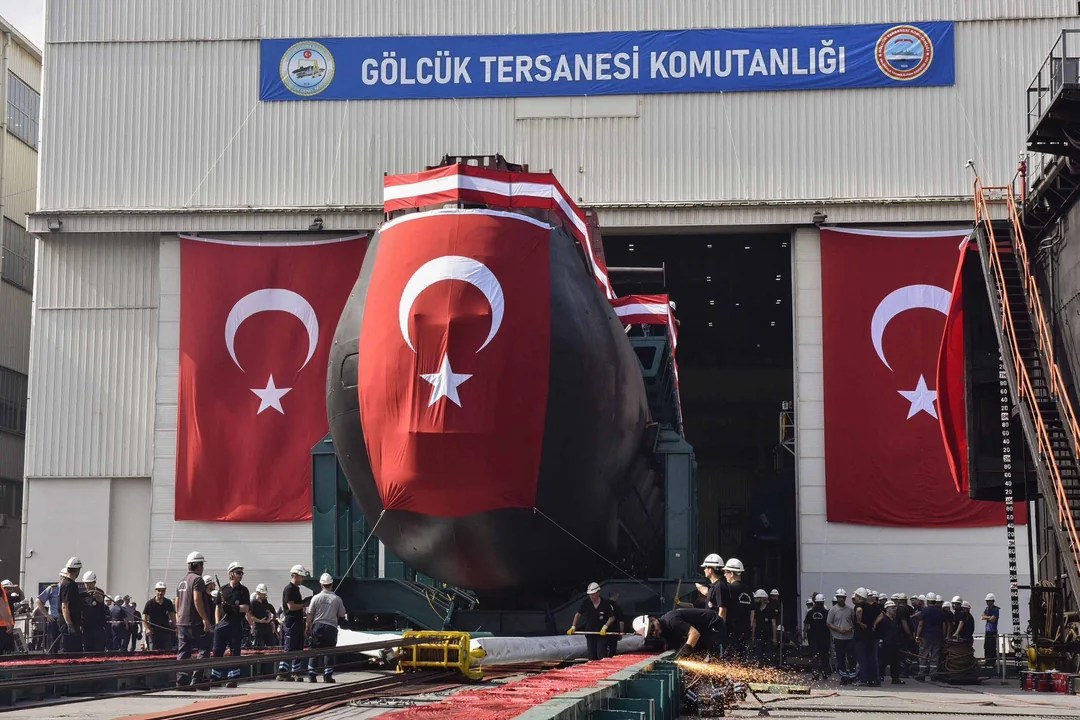
The development and construction of nuclear-powered submarines demand massive investments across several phases: research and development (R&D), infrastructure expansion, unit construction, personnel training, and long-term operations and maintenance. The R&D phase alone—which includes nuclear propulsion systems, reactor design, safety protocols, and waste management—could cost billions of U.S. dollars, depending on whether Türkiye pursues independent development or engages in foreign technological collaboration. Additional adaptations for naval use—such as pressure hull design, advanced sonar systems, and weapons integration—would add significantly to the budget.
According to the UK’s National Audit Office, the cost of constructing the first three Astute-class submarines was £3.536 billion. This occurred in a country with over 75 years of experience in designing and building both SSNs and SSBNs.
For Türkiye, the construction cost of a single nuclear-powered submarine could realistically range between USD 2 billion and 4 billion. On top of that, infrastructure upgrades—including specialized shipyard facilities, nuclear reactor manufacturing capabilities, and radioactive materials handling systems—would demand major investments. Training personnel for nuclear operations and safety could cost hundreds of millions more. When adding in long-term operational and maintenance costs, including fuel, overhauls, and reactor refurbishment, the total price of owning and operating nuclear-powered submarines could easily run into the tens of billions of dollars. It would be a monumental and enduring national commitment.
Beyond financial investments, political and diplomatic capital would also be required.
Domestically, while the project might be framed as a symbol of national pride and technological achievement, it would likely attract criticism. Citizens and opposition groups may question the diversion of vast public funds into a defense megaproject, especially if core areas like healthcare, education, or disaster response remain underfunded. Furthermore, given the decades-long development timeline and the potential for political missteps, the program could become a point of vulnerability for the government in power.
Internationally, Türkiye’s pursuit of nuclear-powered submarines would likely raise alarms. Countries such as Greece, Cyprus, and Israel—long wary of Ankara’s military modernization—may view the move as a disruptive shift in the regional balance of power. Russia, in particular, might interpret Türkiye’s entry into nuclear submarine capability as a direct challenge to its naval dominance in the Black Sea.
There would likely be a push from nuclear powers to limit or constrain Turkey’s nuclear capabilities through diplomacy or sanctions. Turkey would need to navigate the fine line between advancing its national security and ensuring compliance with international regulations on nuclear non-proliferation.Turkey’s push for nuclear submarines could strain relations with other NATO members, particularly the U.S., which has nuclear-powered submarines but controls nuclear propulsion technology
Conclusion
Türkiye’s publicly stated ambition to acquire nuclear-powered submarines marks a bold and transformative shift in its naval strategy. This series has explored why such a capability is desired, what it would take to build, and the immense costs—financial, political, and diplomatic—involved. While the road ahead is steep and fraught with complexity, the vision itself is a clear signal of Türkiye’s long-term strategic intent: to become a self-reliant, technologically advanced maritime power capable of asserting influence well beyond its shores. Whether this ambition becomes reality will depend not only on engineering and investment, but on sustained political will and careful navigation of the geopolitical currents that come with such a consequential undertaking.

 devrimyaylali.com