 I recently conducted an interview with the Commander of the Turkish Naval Forces, Admiral Ercüment Tatlıoğlu. The two-part interview is being published in Warship International Fleet Review Magazine. To read it in full, you’ll need to access the magazine.
One of the most significant revelations from the interview, in my view, is how the future of the Turkish Navy is being envisioned.
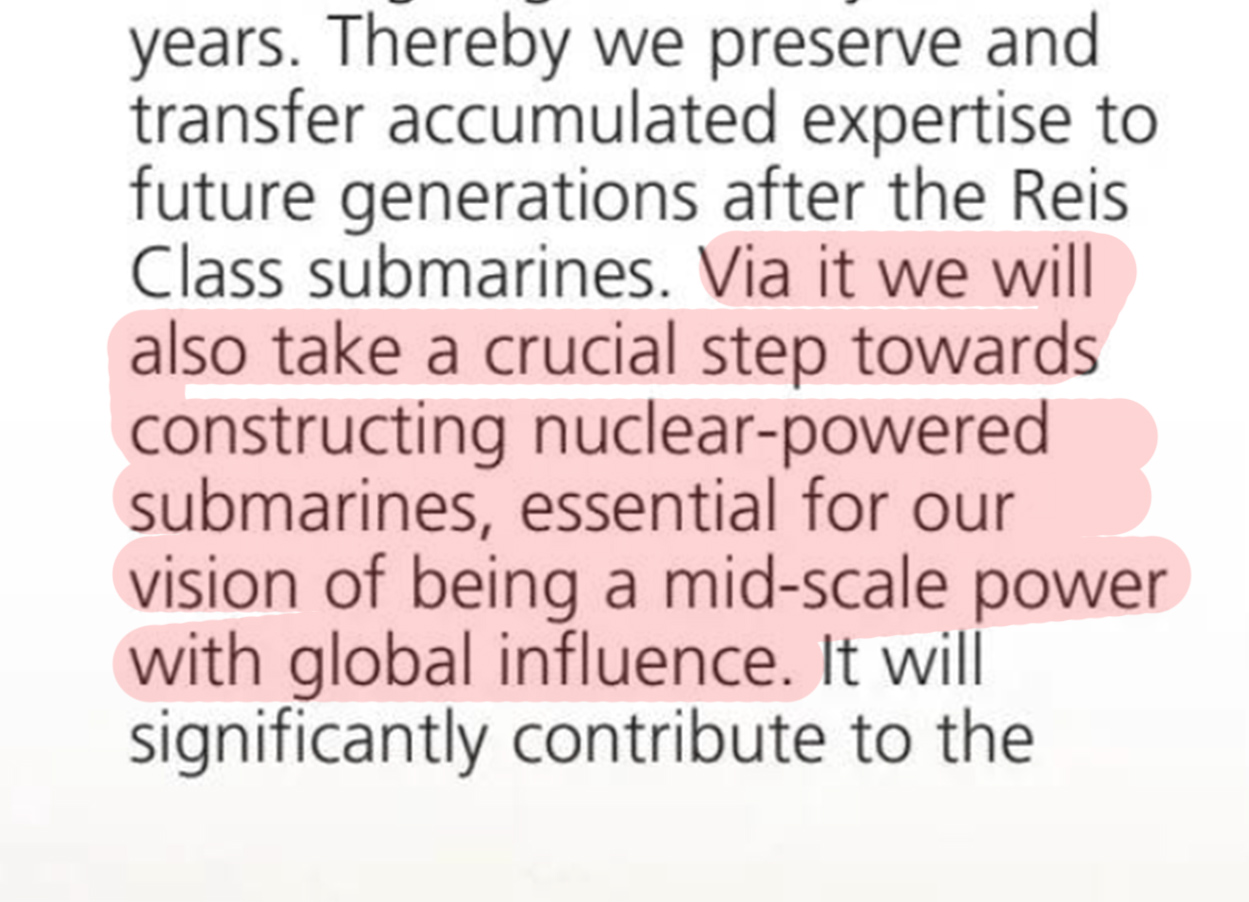
For the first time, an official desire to operate nuclear-powered submarines has been publicly expressed.
This ambitious and challenging statement creates several questions:
- Why does Türkiye need nuclear-powered submarines?
- What does Türkiye need to build nuclear submarines?
- What would it cost?
In this first instalment of our series, I will try to answer the question Why does Türkiye need nuclear-powered submarines?
First of all, a nuclear-powered submarine represents a formidable force projection tool. Türkiye’s acquisition of this capability would place it in an exclusive group of countries, including the U.S., Russia, China, France, the UK, and India, capable of independently designing, constructing, and maintaining nuclear-powered submarines. Possessing nuclear-powered submarines elevates a nation’s global prestige. Turkey would join a select group, which significantly amplifies its diplomatic weight.
This is the same reason why Türkiye has started to construct one aircraft carrier.
Türkiye’s pursuit of nuclear-powered submarines is not just about enhancing its military capabilities; it’s about strategically positioning itself for the future. From ensuring maritime dominance in a volatile region to driving technological innovation within its defense industry, the need for nuclear-powered submarines is becoming more pressing than ever.
To understand how Türkiye is preparing for this leap, we must first examine its current submarine modernization efforts.
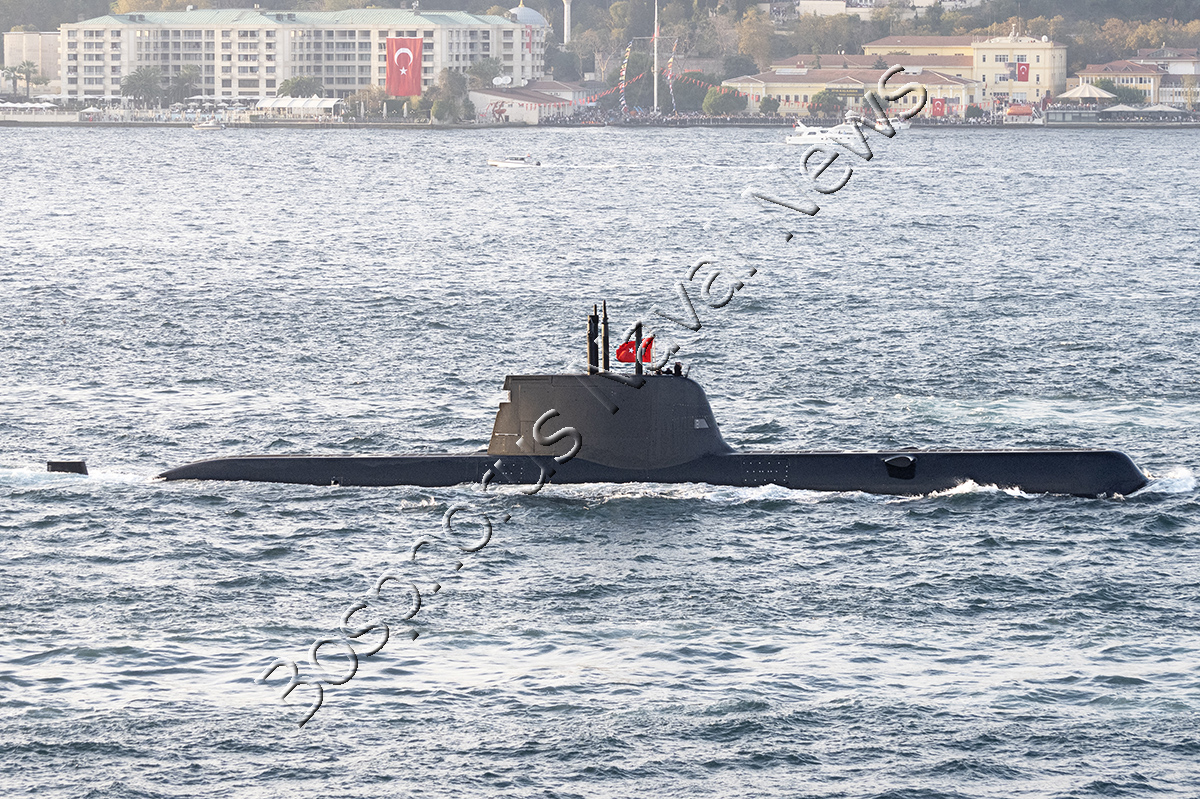
Türkiye has been investing in modernising its submarine fleet. The Turkish Navy’s modernisation efforts made progress with the commissioning of Reis-class submarines featuring air-independent propulsion (AIP) systems. The Reis-class, based on the German Type 214 platform but significantly localised (~80%), represents Türkiye’s first real leap from a foreign-sourced submarine fleet toward a nationalized capability.
The decade-long construction of Reis-class boats at Gölcük Shipyard with a high localization rate (indigenous sonar components, combat systems, hydrogen production for AIP etc.) has created the industrial foundation necessary for more ambitious projects like MİLDEN and nurtured a generation of Turkish engineers, welders, system integrators, and naval architects accustomed to submarine standards.
The MİLDEN project represents a qualitative leap in Türkiye’s naval capabilities, marking the country’s first wholly indigenous submarine program—fully designed, built, and equipped with domestic systems.
The strategic implications of MİLDEN are profound. First, it grants Türkiye design sovereignty, enabling the construction of submarines optimized for regional operational demands. Second, it ensures political independence, eliminating reliance on foreign suppliers and insulating Türkiye from arms embargoes or external vetoes over defense procurement. Finally, MİLDEN holds significant export potential, offering an affordable, non-Western alternative for navies in the Middle East, Africa, and Asia seeking capable yet cost-effective submarine solutions.
While the project is technically feasible given Turkey’s growing technological capabilities, especially in shipbuilding and defense technologies, it would require considerable external collaboration, notably with countries that have advanced nuclear propulsion technologies. The geopolitical implications would be far-reaching, potentially altering regional security dynamics and Turkey’s relations with NATO and other global powers.
Nuclear-powered submarines have virtually unlimited endurance (apart from food and crew needs), enabling them to operate anywhere in the world without the need to surface for fuel. This strategic reach would give Turkey more flexibility in terms of force projection, reconnaissance, and global influence. It could potentially place Turkey’s Navy at the forefront of regional operations, especially in high-stakes zones like the Eastern Mediterranean, the Black Sea, and the Indian Ocean
However, realising this ambition will require overcoming significant technological, industrial, and geopolitical hurdles—challenges that will be explored in the next parts of this series.

 devrimyaylali.com
Sayın Devrim Yaylalı,
Bu makalenizle ilgili olarak:
1- Türkiye’nin “uçak gemisi” inşa kararı tümüyle yanlıştır. Günümüzde hipersonik seyir füzelerinin varlığı, uçak gemilerini tamamen korumasız bırakmış, iri bir demir yığını hedef haline getirmiştir. Bildiğiniz üzere 6-10 Mach ve üzerindeki hızlarda uçan ve manevra yeteneği olan bu füzeler hava ile sürtünme neticesi etrafında oluşan gaz plazmasının radar sinyallerini emmesi, yansıtmaması nedeniyle radarlarda görülmezler. Bu nedenle uçak gemileri ve büyük tonajlı savaş gemileri bu füzelere karşı korumasızdır. Husilerin ABD uçak gemilerini vurabilmesi bu nedenledir.
2- Nükleer takatli denizaltı yapabilmek için öncelikle nükleer reaktör üretimi yapabilmek gerekir. Ayrıca reaktör yakıtını nereden bulacaksınız?
Nükleer ülke olabilmek ise ekonomik ve siyaseten tam bağımsızlık gerektirir. Ayrıca bu tür ileri teknolojiler dindar ve kindar nesillerce üretilemez.
Saygılarımla,
Haluk Dural
DPT eski Uzmanı
Milli Merkez Genel Sekreteri