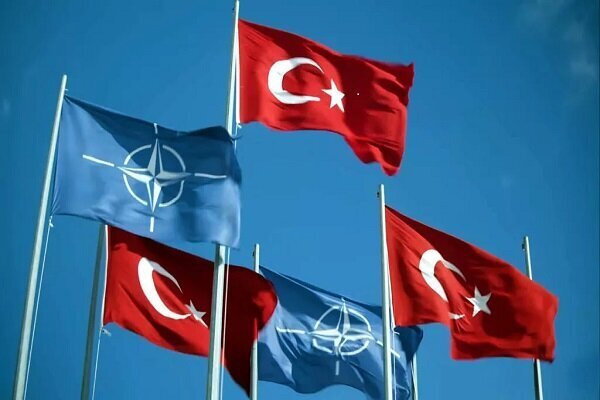
The North Atlantic Treaty Organization (NATO) was established in Washington, D.C., in 1949 by 12 founding members. Türkiye became a member of NATO on February 18, 1952.
With Finland and Sweden joining NATO in 2023 and 2024, respectively, after abandoning their neutrality policies due to security concerns arising from the Russia-Ukraine war, the alliance now consists of 32 member states.
Türkiye’s Contributions to NATO
Since joining NATO in 1952, Türkiye has played a crucial role within the alliance. Its strategic location, strong military, and commitment to regional stability have significantly contributed to NATO’s security. As a nation positioned at the intersection of three continents, Türkiye serves as a key player in NATO’s southeastern flank. Its role as a Black Sea littoral state is particularly critical, as it ensures regional security through its control of the Turkish Straits under the Montreux Convention.
Türkiye’s geographical proximity to the Middle East, including Iraq and Syria, enhances NATO’s presence and influence in the region. By actively participating in NATO’s naval exercises and surveillance missions in the Eastern Mediterranean, Türkiye plays a vital role in strengthening maritime security. Moreover, Türkiye ranks among the top five contributors to NATO missions and operations, demonstrating its commitment to collective defense.
Türkiye is a crucial player in combating terrorism, targeting organizations such as ISIS, Al-Qaeda, PKK/YPG, and FETÖ. It has also been a major contributor to NATO’s Kosovo Force (KFOR), having held command positions and deployed forces to ensure stability in the region. Additionally, Türkiye provides significant personnel support to NATO’s Iraq Mission, assisting in the training and advisory efforts for Iraqi security forces. The country is heavily involved in NATO air and naval operations, assuming leadership roles in standing maritime groups and participating in numerous joint exercises to ensure operational readiness and interoperability among allies.
Financially, Türkiye supports NATO’s Defense Capacity Building initiatives and partnership programs, further solidifying its role as an essential member of the alliance. These contributions highlight Türkiye’s enduring commitment to NATO’s mission and its continued efforts to shape regional and global security strategies.
- In 2024, Türkiye’s defense spending is estimated at 2.09% of its GDP, meeting NATO’s target.
- Approximately 35% of Türkiye’s defense budget is allocated to procurement, R&D, and long-term investments in military technology.
- Türkiye ranks 8th among NATO countries in contributions to the Military Budget and 7th in personnel support to NATO Command Structure.
- Türkiye hosts key NATO institutions, including Allied Land Command (LANDCOM) in İzmir and the Rapid Deployable Corps Headquarters (NRDC-TUR) in Istanbul.
- Türkiye provides training through NATO Centers of Excellence, such as the Counter-Terrorism Excellence Center and Maritime Security Excellence Center.
- Türkiye’s defense industry has significantly advanced, increasing its self-sufficiency to over 80%.
- Developments in drone warfare, air defense, armored vehicles, and electronic warfare contribute to NATO’s evolving defense capabilities.
Discussions About Türkiye’s NATO Membership
Türkiye’s NATO membership has been a topic of debate, particularly regarding the benefits and challenges it has faced within the alliance. Some argue that if Türkiye had not joined NATO in 1952, it could have developed a more independent defense policy and defense industry, free from external political pressures and restrictions on arms procurement. Many countries that have remained non-aligned or pursued independent military policies—such as India—have built strong, self-sufficient defense industries and forged flexible alliances that suit their national interests. NATO membership created dependencies that have sometimes constrained Türkiye’s military and foreign policy choices.
The key argument in favor of Türkiye’s NATO membership is the strategic protection it has received. Without NATO, Türkiye would have faced serious security threats during the Cold War, particularly from the Soviet Union. NATO’s presence acted as a deterrent against potential aggression, ensuring Türkiye’s territorial integrity. Additionally, concerns about the Turkish Straits highlight another critical aspect. The Soviet Union had a strategic interest in controlling the straits, and without NATO’s collective defense, Türkiye might have struggled to resist such pressures.
It is important to note that Türkiye has gained significant experience through joint NATO operations and has benefited from NATO standards in military doctrine, weapon design, and operational planning. These advantages have contributed to the modernization and enhancement of the Turkish Armed Forces. These standards are the foundation on which the Turkish defense industry is based.
As NATO Secretary General Mark Rutte expressed during the pre-ministerial press conference ahead of the meeting of NATO Defense Ministers in Brussels:
“Can I say that the Turkish defense industrial base is really impressive? There are a couple of hundred organizations working on the innovation side. There are a couple of thousand companies involved, part of the Turkish Secretary for the Defense Industry. I met with him in Ankara, and he also visited me here. The head, the chief of that agency, reports directly to the president, President Erdogan’s office. So that is really important. I know there’s a close cooperation between what you are doing in Türkiye with other Allies all over Europe and with the US. You are really supplying some of the most important parts and sometimes end products in terms of what the Turkish industry is producing.”
Although some argue that Türkiye has encountered challenges within NATO and experienced difficulties due to its membership, its involvement in the alliance has undeniably brought significant strategic, military, and economic benefits. Türkiye has played a crucial role in NATO’s regional security strategies, using its geographic location and military capabilities to strengthen the alliance’s collective defense.

 devrimyaylali.com
Devrim bey,
Artık Turkey kelimesini kullanmıyoruz, güzel ülkemiz için.
Türkiye diyoruz.
Galaxy cihazımdan gönderildi
Bu -bence- önemli konu hakkında yapacağınız tek katkı bu mudur? Başka ilave etmek istediğiniz bir şey var mı?