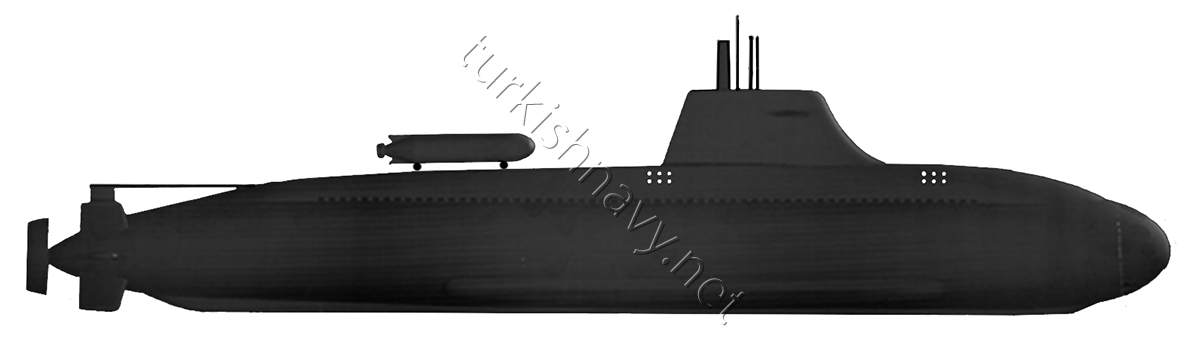
The MILDEN project marks the third and most ambitious phase in Turkey’s submarine strategy, focusing on developing an advanced, fully indigenous submarine capable of next-generation operations.
This project serves as the cornerstone of Turkey’s submarine capabilities, equipping the nation to design, build, and deploy complex underwater systems. Building on advancements in unmanned systems and compact manned submarines. MILDEN is envisioned as a transformative step for the Turkish Navy, designed to meet its next-generation attack submarine needs through self-reliant and technologically advanced solutions.
MILDEN’s design and construction aim to leverage domestic expertise and resources to the fullest extent. Originally slated for a 2025 start, the MILDEN program has undergone schedule adjustments to ensure the robustness of its design. Turkey’s Naval Research Center Command has been managing the project since 2012, applying insights and technical knowledge gained from the ongoing Reis (Type 214TN) class submarine project. The establishment of the MILDEN Design Project Office in 2019 and its subsequent move to Gölcük Naval Shipyard in 2021 marked critical steps forward. By January 2022, Turkey had completed MILDEN’s Conceptual Design Phase, moving it into the Preliminary Design Phase to refine and solidify system specifics.
The MILDEN submarine will feature a hull constructed from high-tensile steel coated with anechoic material, minimizing acoustic wave reflection and enhancing its stealth in sonar-dense environments. MILDEN’s hulls will be built using locally produced HY-100 and HY-130 high-yield stainless ballistic steels, ensuring high corrosion resistance and ferromagnetic properties essential for submarines. This shift to Indigenous materials represents a milestone in Turkey’s defence manufacturing capability.
Equipped with a diesel-electric propulsion system, MILDEN will incorporate an advanced Air-Independent Propulsion (AIP) system, enhancing its underwater endurance. Compared to current Turkish submarines, MILDEN is expected to operate at greater depths, carry a heavier weapons load, and remain submerged longer. According to MILDEN’s Platform Systems Chief Engineer, Captain Izzet Emre Afacan, the prototype’s initial welding is scheduled for early 2025, with the entire construction, installation, and testing phases projected to be completed by 2031. MILDEN is designed as an 80-meter-long submarine with a surface displacement of about 2,700 tons. In addition to two diesel engines, it will be the first submarine made in Turkey equipped with an indigenously developed 300kW air-independent propulsion system.
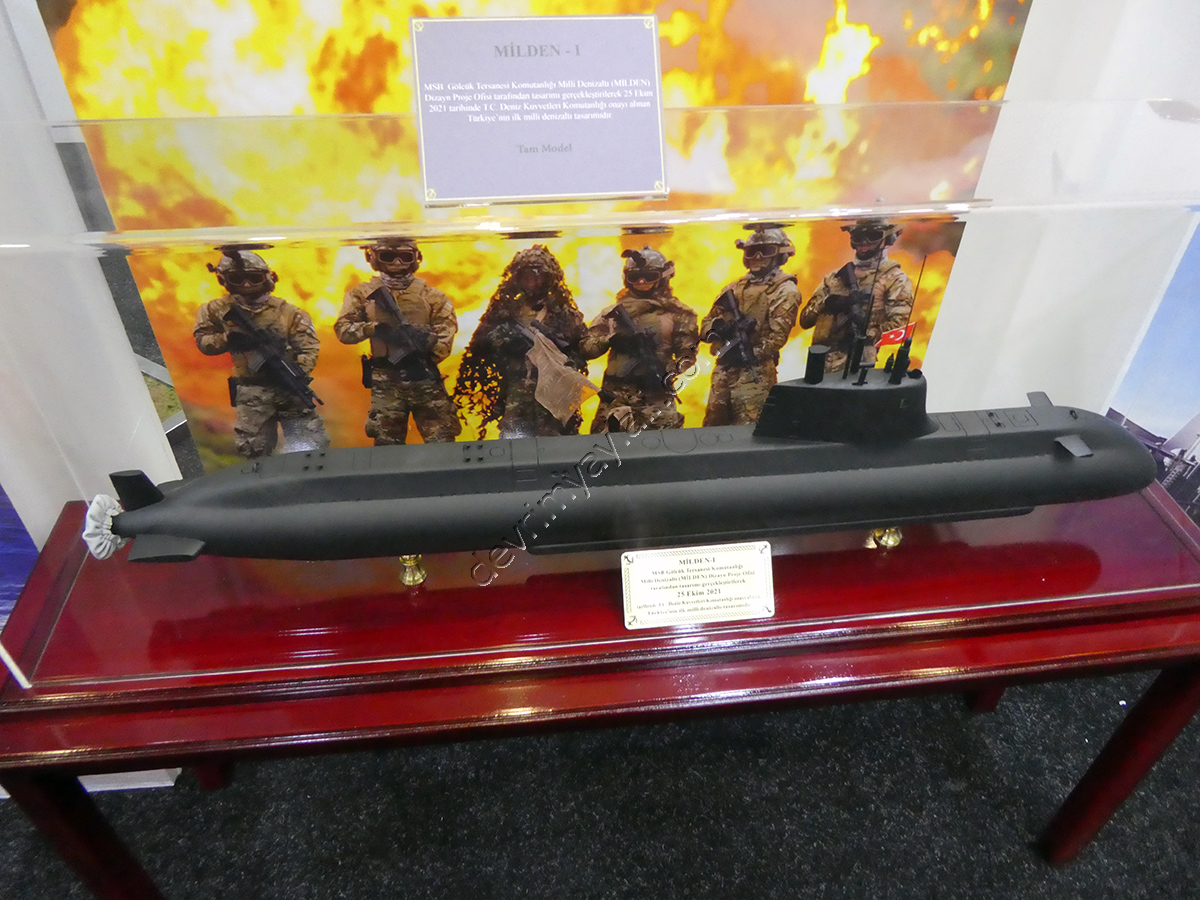
MILDEN’s propulsion system represents a technological leap, incorporating six PEM fuel cell modules, each generating at least 60kW. MILDEN’s AIP system offers substantial underwater endurance, supporting Turkey’s aim for extended, stealthy operations in strategic waters.
MILDEN’s combat capabilities will further reinforce Turkey’s maritime defense. The submarine will be equipped with eight 533mm torpedo tubes, capable of launching indigenous weapons such as the AKYA National Heavyweight Torpedo, Sub-ATMACA anti-ship missile, and GEZGIN submarine-launched cruise missile. In addition to these armaments, MILDEN will carry a domestically developed navigation radar, as well as a sonar suite that integrates low-frequency flank arrays, bow arrays, and towed arrays to provide comprehensive situational awareness.
IN CONCLUSION
In summary, Turkey’s submarine development initiatives reflect a broad strategy to build a more self-sufficient defense industry and to expand its technological expertise in underwater systems. By progressing along multiple fronts—autonomous systems, small manned submarines, and larger indigenous designs—Turkey aims to strengthen its capabilities in underwater operations while advancing its industrial base.
Projects like the MILDEN submarine signify a long-term vision to bring critical defense capabilities in-house, reducing reliance on foreign suppliers and enhancing operational flexibility

 devrimyaylali.com